Why Two Nearly Identical Forest Park Homes Can Have Two Different Water Pipes
September 17, 2026
September 17, 2026
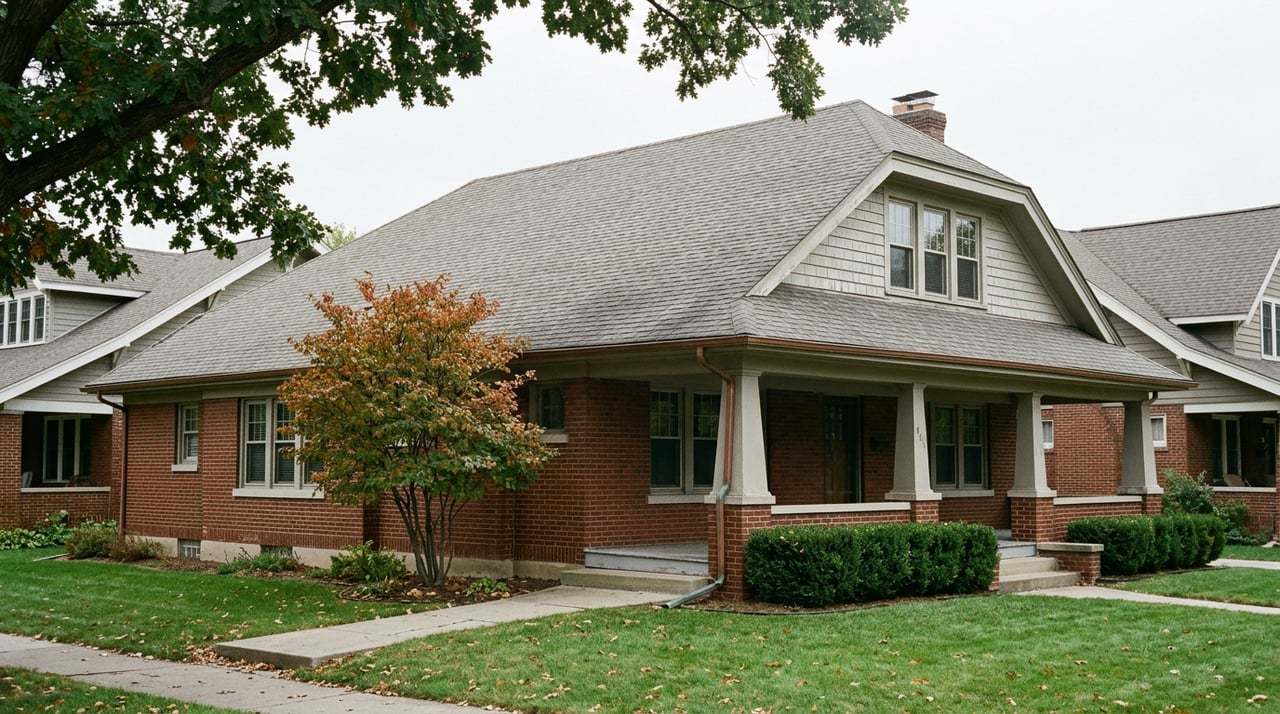
The house at one end of the block and the house at the other end were built the same decade, share the same brick, and sit on the same water main. One has a copper service line. The other still has lead. Neither owner did anything to earn the difference. The line between them was drawn ten years ago by an engineering firm working through a village map, phase by phase, and it has nothing to do with either house's age, upkeep, or the seller's honesty on a disclosure form.
That is the part of Forest Park's water infrastructure story that most guides to Illinois seller disclosures never get to, because it is not a state law question. It is a street-by-street question, and right now, in September 2026, the village is in the middle of answering it on Jackson Boulevard.
Illinois sellers fill out the Residential Real Property Disclosure Report, and one of its questions touches on lead plumbing. The law only requires a seller to disclose what they actually know. It does not require testing, excavation, or a call to the water department before listing. A seller who has genuinely never looked at their service line pipe can, in good faith, answer that they don't know.
That's a very different standard from the federal lead-based paint disclosure, which applies to any home built before 1978 regardless of what the seller has or hasn't checked. Buyers of a 1920s Foursquare on Marengo or a courtyard building near Circle Avenue will get the EPA lead paint pamphlet no matter what. Whether that same home's water service line is lead or copper is a separate question entirely, and it depends on where the pipe sits, not how old the house is.
In Forest Park, where the pipe sits is a matter of public record. The village has been replacing lead lines with copper for close to a decade, but it hasn't done it all at once. It has done it in phases, and the phase boundaries run down specific streets.
According to reporting from the Forest Park Review, the project has moved through the village in stages defined by cross streets, not by age of construction or block number:
| Phase | Area Covered | Status as of research |
|---|---|---|
| Phase 1 | South of Roosevelt Road, from Harlem Avenue to Beloit Avenue | Completed in an earlier stage of the project |
| Phase 2 | South of I-290, from Beloit Avenue to Des Plaines Avenue | Completed in an earlier stage of the project |
| Phase 3 | Additional areas including work along Jackson Boulevard | Underway, engineered by Christopher B. Burke Engineering |
A house a few doors inside a completed zone has a documented copper line. A house just across the phase boundary, waiting on phase three or a future phase, may still have the original lead pipe running from the buffalo box to the water meter. Same era, same builder in some cases, different pipe. That's the mechanism buyers and sellers on either side of these lines should understand before they assume anything about a specific address.
The village's own numbers show how much work has been left to later phases. According to a 2023 inventory filed with the state, Forest Park had roughly 3,400 total water service lines, with about a third confirmed lead and another 42 percent partial lead. A 2024 update from the Review put the remaining count still needing replacement at more than 2,300 lines. That is the backdrop against which each phase boundary gets drawn.
This isn't abstract. As of this writing, Forest Park is in the middle of a $3.7 million project on Jackson Boulevard between Des Plaines and Harlem Avenues. Construction started the last week of April 2026 and is expected to run through November 2026, replacing the fifty-year-old water main beneath the street along with lead service lines in the surrounding area. Village Administrator Rachell Entler told the council the timing was coordinated with the school district and library specifically because of the disruption lead line work brings.
If you own, or are about to buy, a home anywhere near that corridor, this is not background noise. It's the reason for lane closures through the fall, and it's also the reason a house on that stretch might go from "unknown" to "documented copper" within the next few months, simply because of where it sits on the map, not because anyone requested it.
The village's lead service page is direct about the current arrangement: the replacement is currently funded and comes at no cost to homeowners. That funding has come from Illinois EPA State Revolving Fund awards, including one for $2,309,465 announced in April 2025, covering an estimated 369 service lines through principal forgiveness, meaning Forest Park doesn't have to repay it. A further request of nearly $2.5 million was made to cover phase three.
That's good news for anyone whose block falls inside a funded phase. It is not a permanent guarantee for everyone still waiting. State law requires municipalities to inventory and replace lead lines on a schedule, at minimum 6 percent per year, with all lines addressed within 17 years, and communities had until April 15, 2027 to submit a final inventory. But the law doesn't guarantee state or federal dollars will cover every remaining line. If village funding for a future phase falls short before a homeowner's block comes up, the cost shifts to the property owner for their side of the line, the portion running from the buffalo box to the house.
What that costs varies widely depending on the source and the property. The U.S. EPA's general estimate for a full lead service line replacement is around $4,700 nationally, though site conditions can push costs higher. Closer to home, the west suburb of La Grange has estimated the homeowner's share of a private-side replacement at $7,000 to $9,000 per line. Neither figure is what Forest Park residents will necessarily pay if their turn comes without full grant coverage, but both suggest the number is not trivial if a household ends up funding it themselves.
If your Forest Park home sits inside a completed phase, that is worth confirming and mentioning, since a documented copper line removes a point of uncertainty for buyers before they even ask. If your home sits in an area not yet reached, honesty on the disclosure form protects you either way. You are not required to investigate what you don't know, but if you do know your line is still lead, or you know it was already replaced, say so clearly rather than leaving the box blank out of convenience.
Before you list, it's worth checking your address against the village's records or contacting public works directly to see which phase your street falls under. That single fact can shape how you frame the sale and what questions you're prepared to answer at the negotiating table.
A disclosure form that says "unknown" isn't a red flag. It's simply accurate for a homeowner who has never had reason to check. Before you assume anything about a Forest Park property's water line, consider a few steps:
Does a lead service line affect my ability to get a mortgage? Illinois disclosure law doesn't require repair before closing, and lenders typically underwrite based on the property's overall condition rather than pipe material alone. Ask your lender directly if you have concerns specific to your loan program.
If my street is in a completed phase, does that mean my whole house is lead-free? It means the service line from the buffalo box to the meter has been addressed. Interior plumbing, fixtures, and solder are a separate question and fall outside the village's service line project.
Is Forest Park's drinking water currently unsafe? Village officials have stated that trace lead levels in the water supply are low and treated water is considered safe to drink, while the pipe replacement project continues as a long-term infrastructure and public health measure rather than an emergency response.
Forest Park's pipes are being replaced street by street, not all at once, and that pattern means the most useful question you can ask about a specific home isn't "how old is it." It's "which side of the line is it on." If you're weighing a purchase or a sale near one of these phase boundaries and want a clear read on what it means for your specific address and your timeline, Monica Dalton and the Dalton Home Collective can walk you through it. Schedule a Consultation to talk through your next move.
Stay up to date on the latest real estate trends.

Things To Do
We love helping buyers find “the one,” offering guidance on potential resale value or remodeling ideas, and helping sellers stage their homes to make a great first impression.