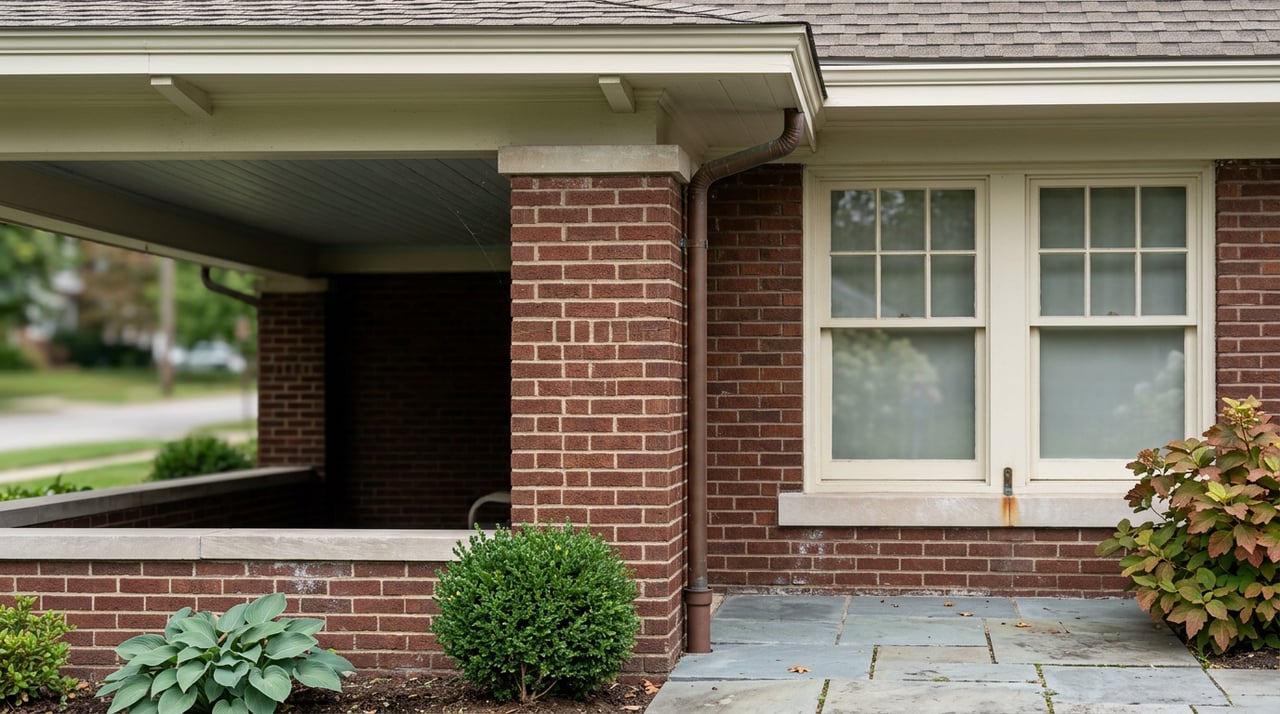
The Certificate That Can Stall Your Closing: Inside Oak Park's 2025 Historic District Approval Fights
August 20, 2026
August 20, 2026
What happens when the volunteer commission built to protect your block's architecture says no to a project, and the elected board overseeing that commission says yes anyway?
That is not a hypothetical. It played out in Oak Park through most of 2025, and it ended with the chair of the Historic Preservation Commission announcing his resignation at a meeting in October. If you own, or plan to buy, a home inside one of Oak Park's three local historic districts, that fight matters more than any paint-color guideline you have read about online. The real friction in these districts is not what you can and cannot do to your porch. It is that the approval process itself has no guaranteed outcome, no cap on how many times it can be replayed, and, as of this year, a shifting rulebook.
Oak Park has three locally designated historic districts, and which one your address falls in determines whether the Historic Preservation Commission has a say in your exterior work. The Frank Lloyd Wright-Prairie School of Architecture Historic District was first recognized locally in 1972 and listed on the National Register the following year, then expanded onto the National Register in 2009 and locally in 2012. The Ridgeland/Oak Park Historic District followed a similar two-step path, landing on the National Register in 1983 and gaining local designation in 1993. The Gunderson Historic District is the newest, registered nationally and designated locally in 2002, then expanded in 2003.
The district lines are public record through the village's historic preservation ordinance, and any agent or title company can confirm which district, if any, applies to a specific address before you write an offer.
A Certificate of Appropriateness, usually shortened to COA in commission paperwork, is required for exterior changes visible from the street on landmarks and on properties inside these three districts. That definition is broader than most buyers expect. It is not limited to additions and new construction. Demolishing a garage counts. Rebuilding after fire damage counts.
Take the case the commission reviewed in mid-2025 involving a homeowner on Home Avenue seeking to renew a COA to demolish a historic garage in the Ridgeland-Oak Park district. The commission did not simply take the homeowner's word that the structure was unsound. It required two separate structural assessment reports, one of them from a third-party engineer with no prior relationship to the property, and it went back through the file to confirm cost estimates that had originally been submitted two years earlier. Only after that documentation held up did the commission approve the demolition.
Fire damage does not get a pass either. The commission first discussed a COA application on East Avenue in March 2025 to demolish and rebuild an entire second floor and roof after a fire, along with partial first-floor reconstruction. By that summer, staff had approved a separate demolition permit for the damaged portion so the homeowner could assess the extent of the loss and work with their insurer, while the full rebuild still needed to go through preliminary review before a formal COA hearing. If your renovation plan assumes insurance settles the timeline, a historic district adds a second clock running in parallel.
Solar panels are the clearest example of how fast the ground can shift here. As of January 2025, a homeowner who installed panels on a street-facing roof slope, despite the commission's stated objection, faced no real consequence, because solar only required an Advisory Review at that point. That review produces a recommendation, not an enforceable decision.
The commission changed that two months later. Under the revised guidance adopted in March 2025, any solar installation proposed on a front roof slope now requires a full Certificate of Appropriateness, and the requirement applies regardless of the roof's material. By June, the commission was still refining the details, including how the rule applies to corner-lot buildings with flat roofs along streets like Washington Boulevard and Oak Park Avenue, which in some cases can avoid the COA requirement entirely.
If you are buying a historic district home with rooftop solar on your renovation list, the guideline your contractor quotes you from a year-old conversation with a neighbor may no longer apply. This is a commission that is still actively writing its own rules, in public, in real time.
The most consequential case of 2025 involved a proposed addition at 1035 South Boulevard. The commission denied the Certificate of Appropriateness on preservation grounds, and the applicant resubmitted. Under Oak Park's ordinance, there is no limit on how many times a COA application can come back for review. Commissioner Roman confirmed as much directly in a July meeting: applicants can resubmit as many times as they want. The commission ended up voting on the same project three times.
Approving a COA takes six affirmative votes from the seven-member commission, which means a single skeptical meeting is often enough to send a project back to the drawing board. That high bar worked against this applicant three times over, and one commissioner noted during deliberations that the property sits in zip code 60301, described in a housing consulting report discussed at the meeting as the village's most expensive rental area.
The applicant appealed to the Village Board, which has final authority over the commission's decisions. In October 2025, the board overturned the HPC's denial. At the commission's next meeting, members read a letter criticizing that reversal, discussed a public response to a local news outlet, and the chair, Lou Garapolo, told the commission he would be resigning in light of how the appeal had played out. The commission's own outgoing chair described the process as having drifted from a preservation question into a housing debate.
For anyone with a stake in a contested Oak Park property, the lesson is not about this one address. It is that a historic district denial is not the end of the road, and a historic district approval is not guaranteed to survive an appeal either.
If your home has any open or recently expired historic preservation approval, get ahead of it before you list. Certificates of Economic Hardship run on the same fixed clock as a COA, and letting one lapse has real teeth. In one case discussed at the March 2025 meeting, a homeowner's Certificate of Economic Hardship expired because they never followed through with the required demolition permit, and the village's Code Enforcement Division moved to issue citations for the underlying violation. A buyer's attorney or inspector doing due diligence will find that kind of lapse in village records, so it is far better for you to disclose and resolve it before it becomes a negotiating point against you.
If you have exterior work planned before listing, whether it is a roof, siding, windows, or a garage, check with village staff on whether it needs review before your contractor breaks ground. Work started without an approved COA can complicate a sale even if the finished product looks fine from the street.
Ask whether any exterior renovation on your wish list has come before the commission for a comparable property recently, and how that review went. A garage demolition will likely require a structural report from a truly independent third-party engineer, not just the firm that built the structure originally, so budget for that cost and the time it takes. A front-facing solar array now needs a full COA rather than a lighter advisory review, which adds real weeks to a project timeline that a solar installer's standard quote will not include.
And if a property you are considering has an addition or major exterior change pending before the commission, understand that a denial is not necessarily final and an approval is not necessarily safe from appeal. Build that uncertainty into your timeline rather than assuming the paperwork will move at the pace of an ordinary permit.
Does a Certificate of Appropriateness apply to interior work? No. Commission review is limited to exterior changes visible from the street on landmarks and properties within the three designated districts.
Can I still put solar panels on my roof if I'm in a historic district? Often yes, but as of the March 2025 guideline update, any panels visible on a front-facing slope require a full COA rather than the lighter advisory review that applied previously.
What if the commission denies my project? You can resubmit. The ordinance does not limit how many times an application can return to the commission, though each hearing still requires six affirmative votes out of seven members to pass.
Buying or selling a home with real architectural character in Oak Park is one of the more rewarding parts of this work, and it is also one of the more procedurally involved. If you are weighing a purchase or a listing inside one of these three districts, Dalton Home Collective has walked clients through this exact process, from checking a property's district status before an offer to coordinating with contractors who already know what the commission expects. Schedule a Consultation and let's talk through what your specific address and your specific project actually require before you commit to a timeline.
Stay up to date on the latest real estate trends.

Things To Do
We love helping buyers find “the one,” offering guidance on potential resale value or remodeling ideas, and helping sellers stage their homes to make a great first impression.